In Italian, testa di moro is a color before it is anything else: a very dark brown, the shade of strong espresso or a well-worn leather belt. The same two words name the ceramic heads we make in Caltagirone, Sicily, and the two meanings share a root but not a palette. If you came here for the paint shade, this page tells you what it is, and if you came for the ceramic, it tells you which colors actually go on it.
Testa di moro as a color: a very dark brown
The literal translation is “Moor’s head.” In everyday Italian it works as a standard color term, the way “navy” or “charcoal” does in English. It describes a deep, slightly cool brown that sits between chestnut and black. Hardware stores use it for aluminum and PVC window frames, shutters and gates. Leather workers use it for belts and bags. Car dealers use it for interiors.
There is no single official standard behind the name. In the window and door trade it is usually matched to RAL 8017, the chocolate brown in the German industrial color chart, and that is the closest reference we can give with confidence. Online swatches labeled testa di moro drift from a warm coffee brown to a near-black, so if you are ordering paint or fabric by this name, ask for a physical sample.
One more clue to the tone: in Italian, “moro” also describes a person with dark hair, and the color carries that association of dark hair and dark skin.
Where the name comes from
Moors, in the Italian sense, were the Arab and Berber people who ruled Sicily from 827 until the Norman conquest in the late 11th century. Their two and a half centuries here left words, crops, irrigation and, in Caltagirone, a taste for glazed pottery the town has never lost. “Moro” came to mean a dark-skinned North African, then simply “dark.”
The ceramic head has its own story, a Palermo legend about a Moorish merchant, a Sicilian girl and a basil plant. We tell it in full in our guide to what a Testa di Moro is and how the legend goes. What matters here is that the color and the vase draw on the same word for the same people, but they grew up separately. We have not traced when the color term first appeared in print, and we would rather say so than guess a date.
The ceramic head is mostly not that color
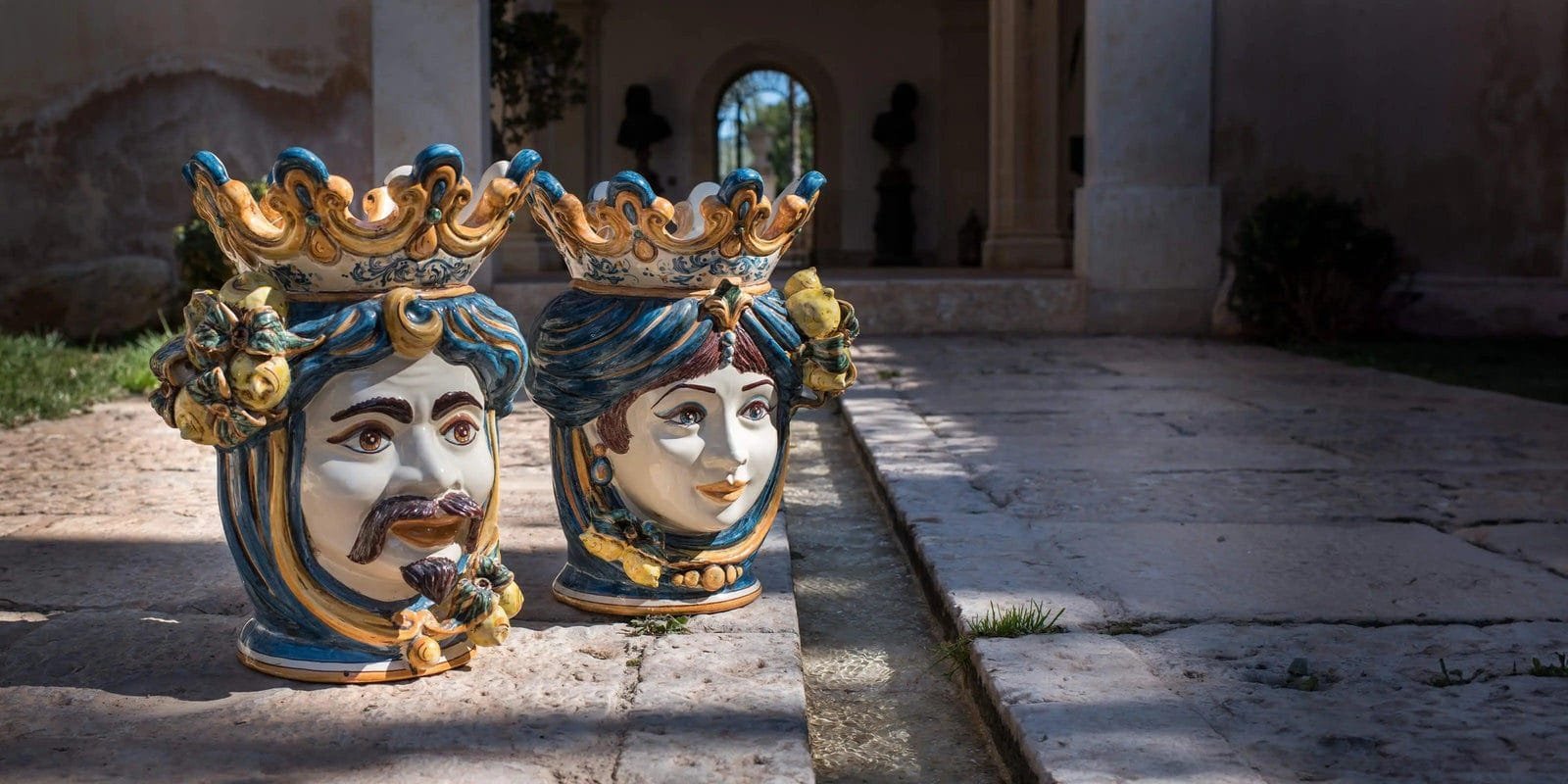
This surprises people. A Testa di Moro vase from Caltagirone is one of the most colorful objects in Sicilian ceramics. The crown or turban, the fruit, the leaves, the earrings and the collar are painted in yellow, green, cobalt blue and orange over a white glaze. The dark brown of the color name shows up in one place, the face, and not always there.
There are three common ways to treat the faces of a pair:
- Contrasting faces. The Moor in dark manganese brown, the woman in the bare white glaze with only the features outlined. This is the treatment most buyers picture.
- Both faces warm. A terracotta or ochre skin tone on both heads, closer to a sun-tanned Mediterranean complexion.
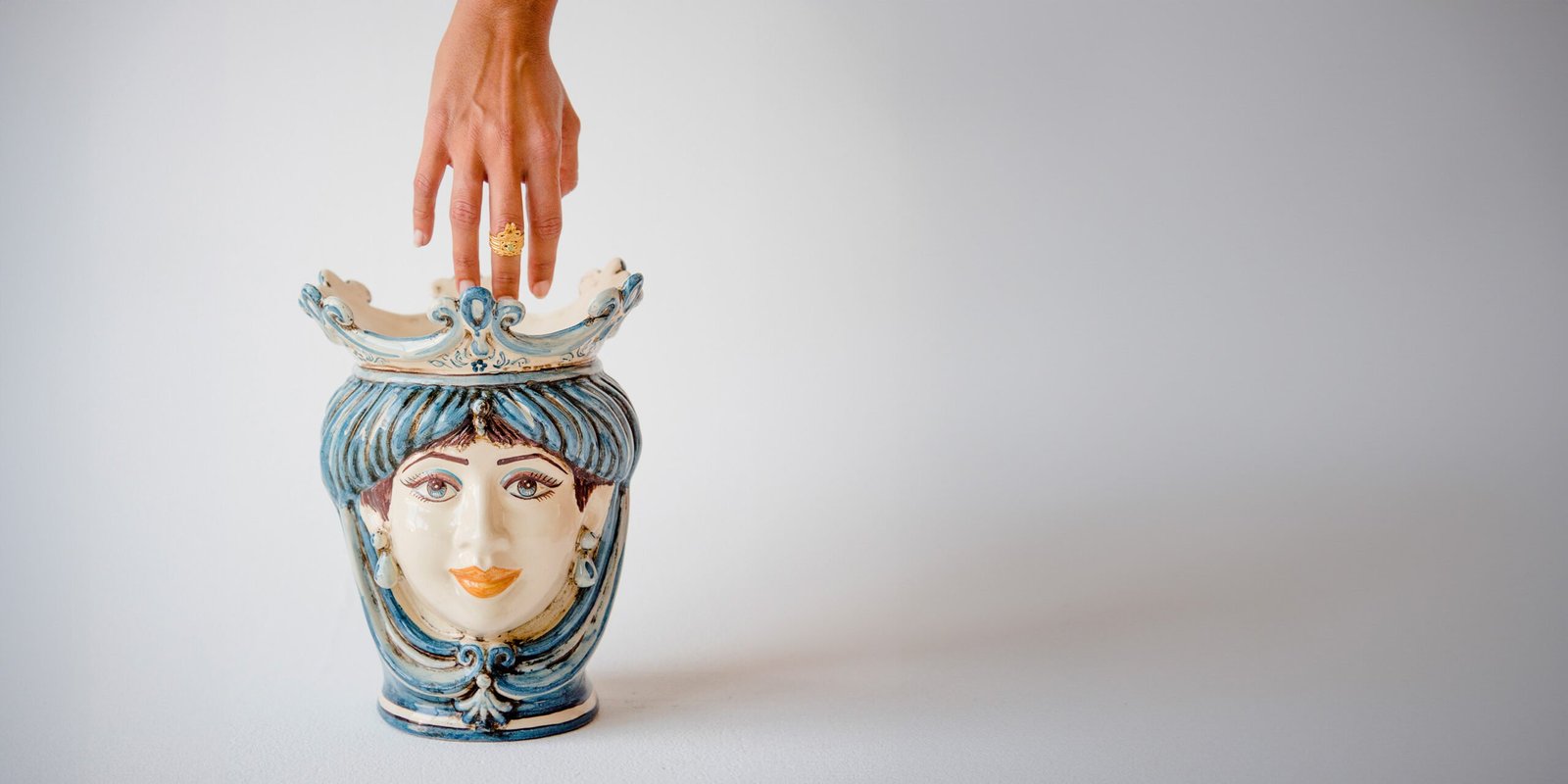
- Both faces white. The glaze left uncolored, eyes and lips painted on, so all the color goes into the crown and decoration.
Which one you receive depends on the workshop and the model. If it matters to you, ask before you order, and ask in plain words. “Dark brown face” or “white face” is clearer than “testa di moro color,” which can mean either the object or the shade.
The decorations themselves, the crown, the blue and orange ornato, the lemons, mother of pearl and gold, are a subject of their own, and we read them one by one in Testa di Moro colours and decoration. This page stays on the name and on the pigments.
The colors we actually fire in Caltagirone
The historic Caltagirone palette has four colors, each from a metal oxide: yellow from antimony, green from copper, blue from cobalt and brown-black from manganese. Orange and red, iron-based or from modern prepared pigments, came later and are now standard. All of them sit on a white tin glaze that gives the pieces their bright ground.
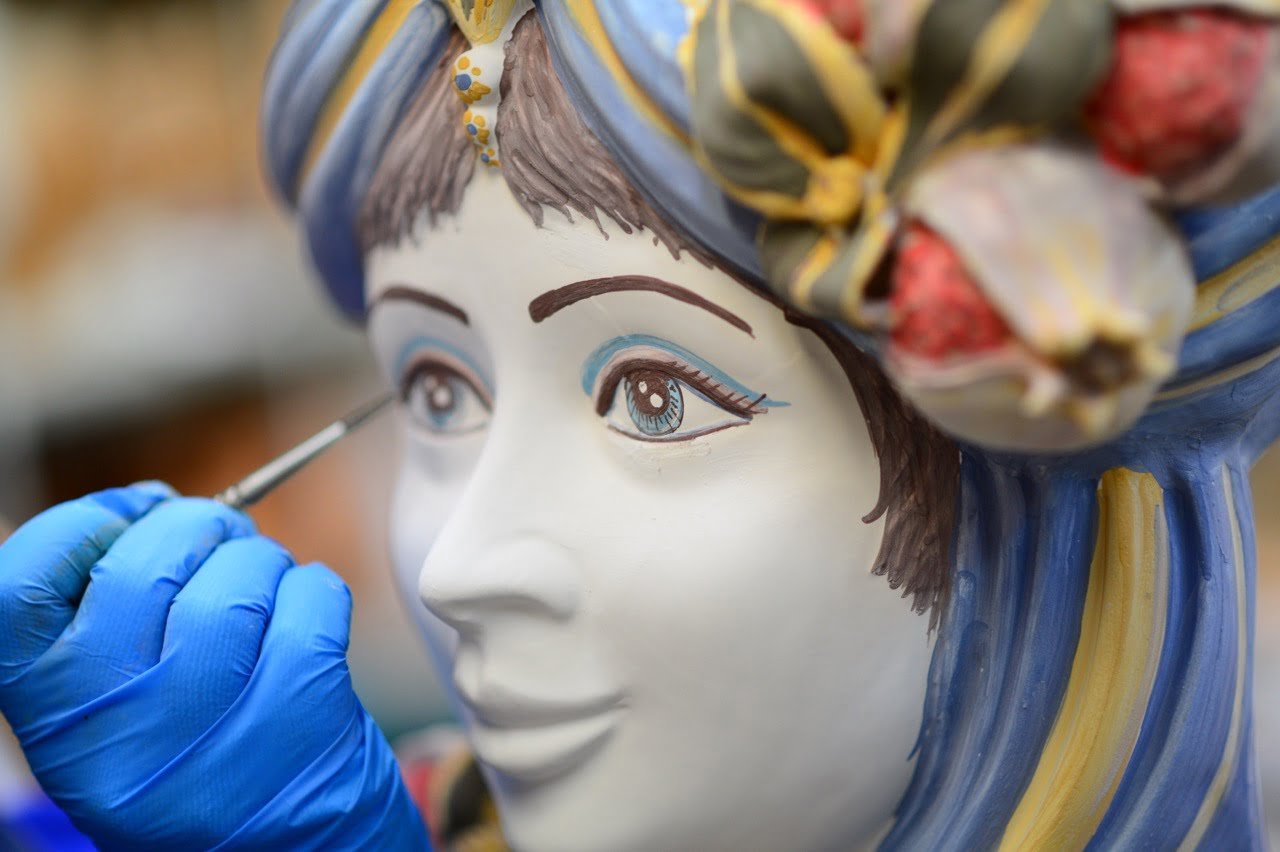
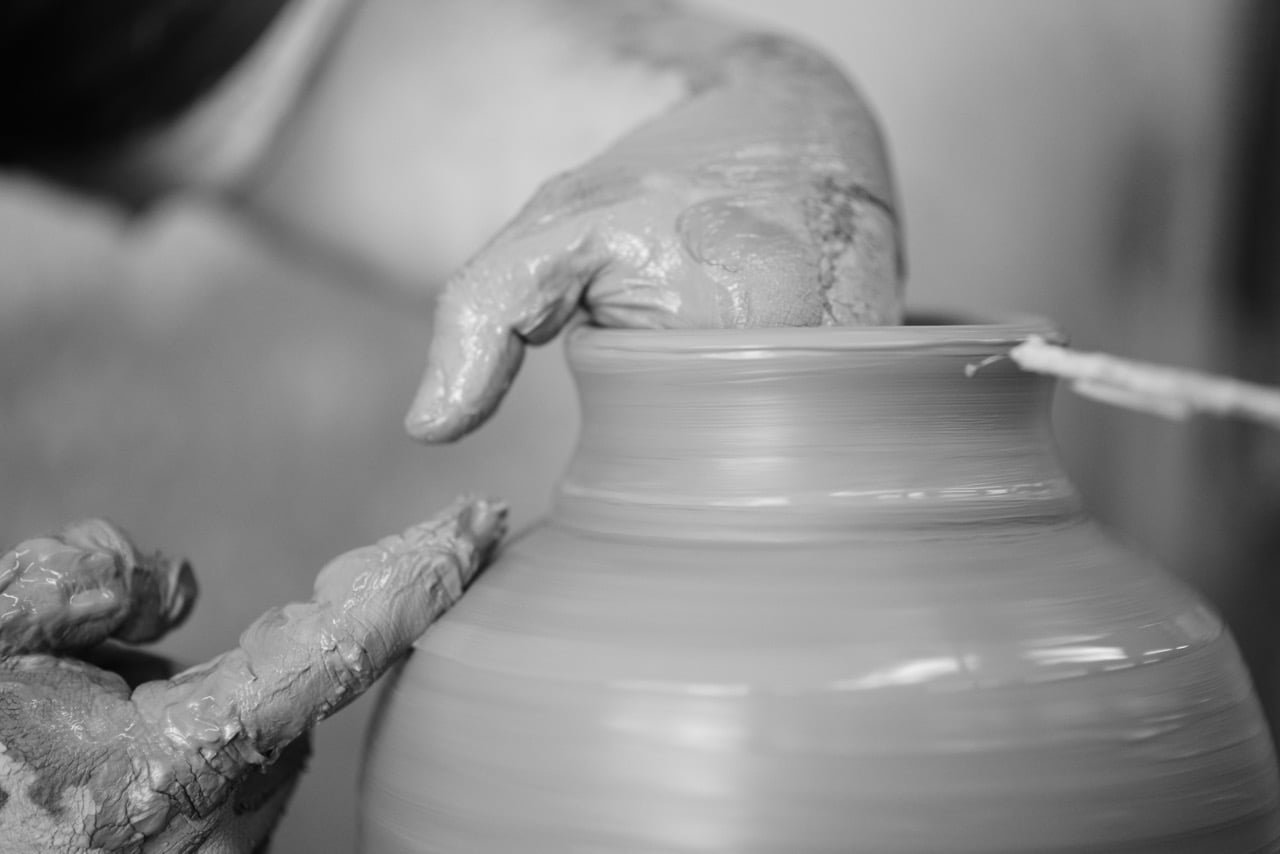
We fire twice. The raw clay goes into the kiln first at around 1000°C (about 1830°F) and comes out as bisque. We dip the bisque in white glaze, and our painters decorate directly on that dry, powdery surface. The second firing, at 920 to 980°C (about 1690 to 1800°F), melts glaze and pigment together into one glossy skin. This is the old majolica method, and it is why nothing can be touched up after firing.
Before firing, nothing looks right. Cobalt is gray-black on the brush. Copper green is a dull gray. Manganese, the color of the Moor’s face, goes on as a dusty purple-gray and comes out of the kiln as deep brown. A painter learns to see what the kiln will return, not what is on the piece.
Manganese also explains why two Moor faces from the same painter can differ. Applied thin, it fires to a warm chocolate. Applied thick, it turns nearly black with a faint metallic sheen. Position in the kiln shifts it another shade. On a hand-painted piece this variation is normal, and we do not call it a defect.
Reading color in photos before you buy
Glaze is glossy, and gloss changes how color reads under different light. Photos taken in Sicilian daylight look cooler and more saturated than the same head will look under warm 2700K bulbs in a living room in Ohio or Kent. Blues shift the most, greens next.
A few practical steps:
- Ask for a photo of the exact piece you will receive, not the catalog sample.
- Ask for one shot in daylight and one under indoor light if the seller can manage it.
- For a pair, ask whether the two heads were painted and fired together. Same batch, closer match.
- Choose the size with color in mind. Tabletop heads of 15 to 20 cm (6 to 8 in) hide variation. At 40 to 50 cm (16 to 20 in) the face is a large flat area, and any unevenness in the manganese shows.
Common mix-ups with the name
- Buying the paint when you wanted the vase. An Italian search for testa di moro returns shutters and window frames first. Add “ceramica” or “Caltagirone” and the heads appear.
- Expecting a matte finish. The paint swatch is matte. The ceramic face sits under a glossy glaze, so the same brown looks deeper and more reflective.
- Confusing it with the Moro orange. The Moro is one of the three Sicilian blood orange varieties, and it has nothing to do with the vase beyond the island and the word.
Frequently asked questions
What color is testa di moro in English?
A very dark brown, close to chocolate brown. The nearest industrial reference is RAL 8017. It is darker and cooler than chestnut and warmer than black, and because there is no official definition, samples vary.
Are Testa di Moro ceramic heads brown?
Mostly no. The crown, fruit and decoration are painted in yellow, green, blue and orange over white glaze. Only the face may be dark brown, and some models leave both faces white or paint them terracotta.
Why do the two faces of my pair differ in tone?
The face color is manganese oxide painted by hand and fired at 920 to 980°C. The thickness of the brushstroke and the position in the kiln both change the result, so two faces are never identical.
Can I ask for a specific face color?
Usually yes. Describe it in plain words: dark brown, terracotta or white. Then ask for a photo of the finished piece before it ships, because the fired color is the only one that counts.