Ceramics have been made in Sicily for roughly two and a half thousand years, and for most of that time the island was absorbing techniques from whoever arrived next. What reaches you today as a hand-painted vase or a decorated plate carries Greek proportions, Arab glazes and Spanish maiolica in the same object. This page sets out where the tradition comes from, which towns still practice it, and why the pieces look the way they do.
Where ceramics are made in Sicily
The craft is not spread evenly across the island. It sits in a handful of towns, each with its own palette and its own repertoire.
Caltagirone, inland in the province of Catania, is the center of it. The town sits on good clay, which is the practical reason, and its name comes from Arabic, which is the historical one. Its stairway of Santa Maria del Monte, 142 steps with a different majolica pattern on every riser, is the most photographed ceramic object in Sicily, and the town’s late Baroque center forms part of a UNESCO World Heritage listing. There is a ceramics museum and a long-standing art school, which is the reason the skills here have not thinned out the way they have in other craft towns.
The other centers are smaller and quite distinct: Santo Stefano di Camastra on the north coast, Sciacca and Burgio in the west, Collesano in the Madonie mountains, Monreale near Palermo. If a piece is described only as Sicilian, the town is worth asking about, because the decoration usually gives it away.

A tradition built by successive arrivals
Greek and Roman foundations
Pottery in Sicily begins in earnest with Greek settlement from the eighth century BC. The Greeks brought the wheel, control over firing, and a decorative vocabulary of geometric bands and mythological scenes. Under Roman rule the output became more utilitarian and more widely traded, and shapes were standardised for it, but the Greek sense of proportion stayed in the forms and is still visible in an amphora shape today.
The Arab centuries and the glazes
The Arab conquest, from 827 onwards, is the change that matters most to how the work looks now. Arab potters brought tin glazing and luster, and with them the cobalt blues and turquoises that had no precedent on the island. They also brought the habit of filling the ground around a central motif with geometric and floral repeats, which is still the underlying grammar of a Caltagirone decoration. A good deal of the vocabulary of the craft arrived at the same time, along with the name of the town itself.
Norman, Spanish rule and the maiolica workshops

From the Norman period onwards the island’s ceramics moved into what is usually called maiolica: tin-glazed earthenware painted on a white ground, named after the trade route that ran through Majorca. Between the fifteenth and eighteenth centuries the Caltagirone workshops were turning out devotional pieces, pharmacy jars, floor tiles and architectural ornament for churches and palaces across Sicily. That is the period the living repertoire draws on most directly, which is why so many current shapes started as something with a job to do.
Why the pieces look the way they do
Three things explain most of it, and none of them is a matter of taste.
The colors are the ones that survive a second firing. Cobalt blue, copper green, antimony yellow and manganese brown were the pigments that came through the glaze firing without burning out, so those are the colors the tradition is built from. They also happen to be the colors of the landscape they were made in. A decoration that reads as loud in a northern European room was worked out for a courtyard in July.
The ground is rarely left empty. The Arab-derived instinct to fill the field around the motif is why a Sicilian piece looks busier than a Tuscan or Umbrian one of the same date. It is a different idea of where the eye should rest, not a lack of restraint.
The forms follow use. A floor vase is that height because it stood in an entrance hall. A pine cone is a doorstep and gatepost object. A holy water font is shaped to hang beside a door. Almost nothing in the traditional repertoire began as ornament and nothing else, and the pieces still carry the proportions of the job they were made for.
What is actually made today

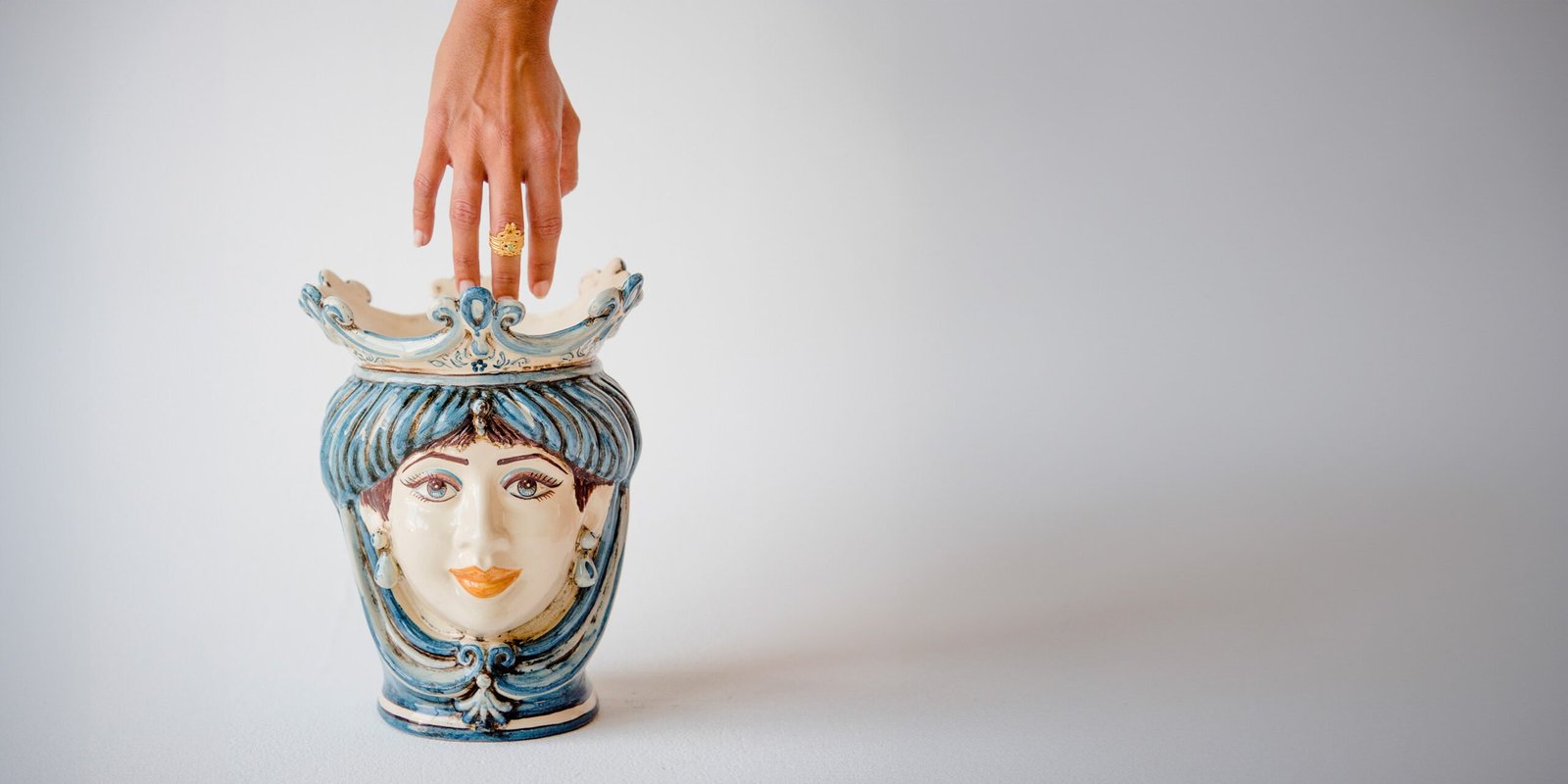
The repertoire in production is narrower than the historical one. It comes down to vases and floor vases, pine cones, lamps, holy water fonts and devotional pieces, ornamental plates, cachepots and planters, and the pair of heads known as teste di moro. Our buyer’s guide to Caltagirone ceramics sets out what each family is, the sizes they come in, and how the decoration lines are named, which is the part that confuses people most.
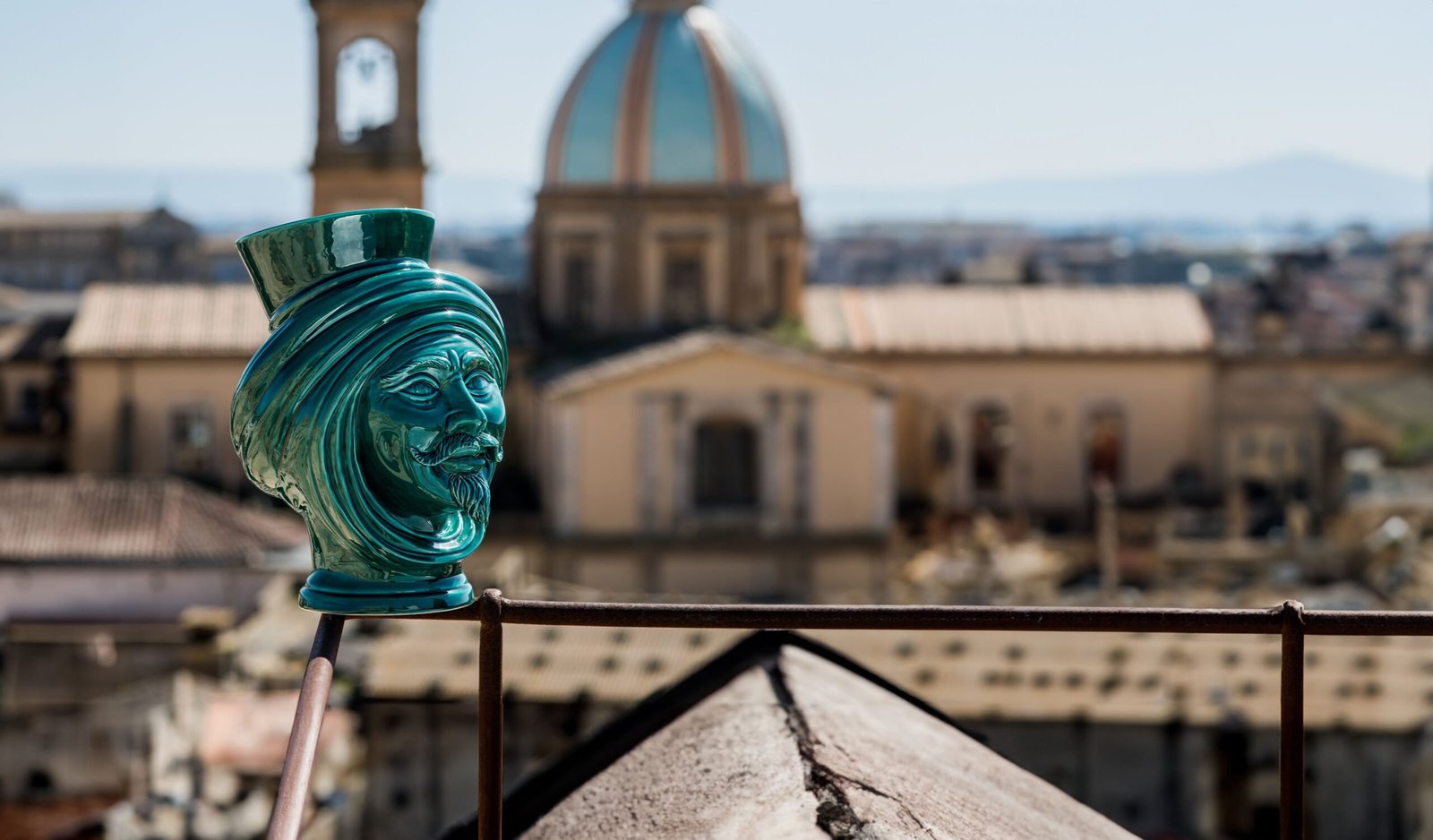
The heads are a case of their own. They carry a legend rather than a function, they are the single most recognisable Sicilian ceramic object outside the island, and they are a large enough subject that we keep them separate from this page.
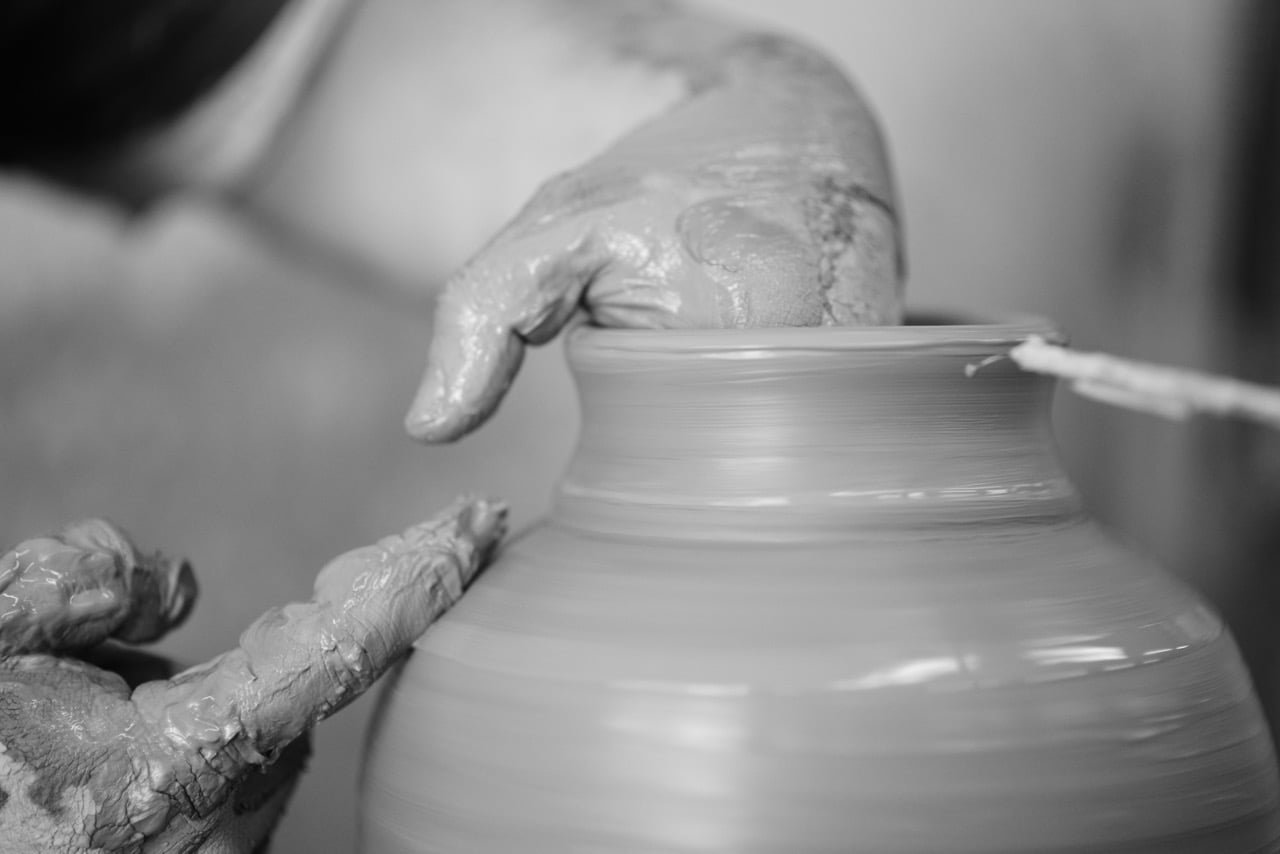
How a piece is actually made has not changed much: the clay is worked and aged, shaped on the wheel or in a mold, given a first firing, hand-painted, then fired again. How Sicilian ceramics are made follows a piece through each of those stages.
Seeing it, and buying it
If you are traveling, Caltagirone is the place to go: the ceramics museum for the historical range, the stairway for the tiles, and the workshops along the streets below it for work being made now. Santo Stefano di Camastra is the easier stop if you are driving the north coast.
If you are buying from abroad rather than visiting, the thing to establish first is who you are buying from, because the same photograph appears on workshop sites and on resale listings at very different prices. Our guide on where to buy authentic Sicilian ceramics online explains how to tell a Caltagirone workshop from a reseller, and identifying authentic Sicilian ceramics covers what to look for in the object itself: brush work, marks, glaze and weight.