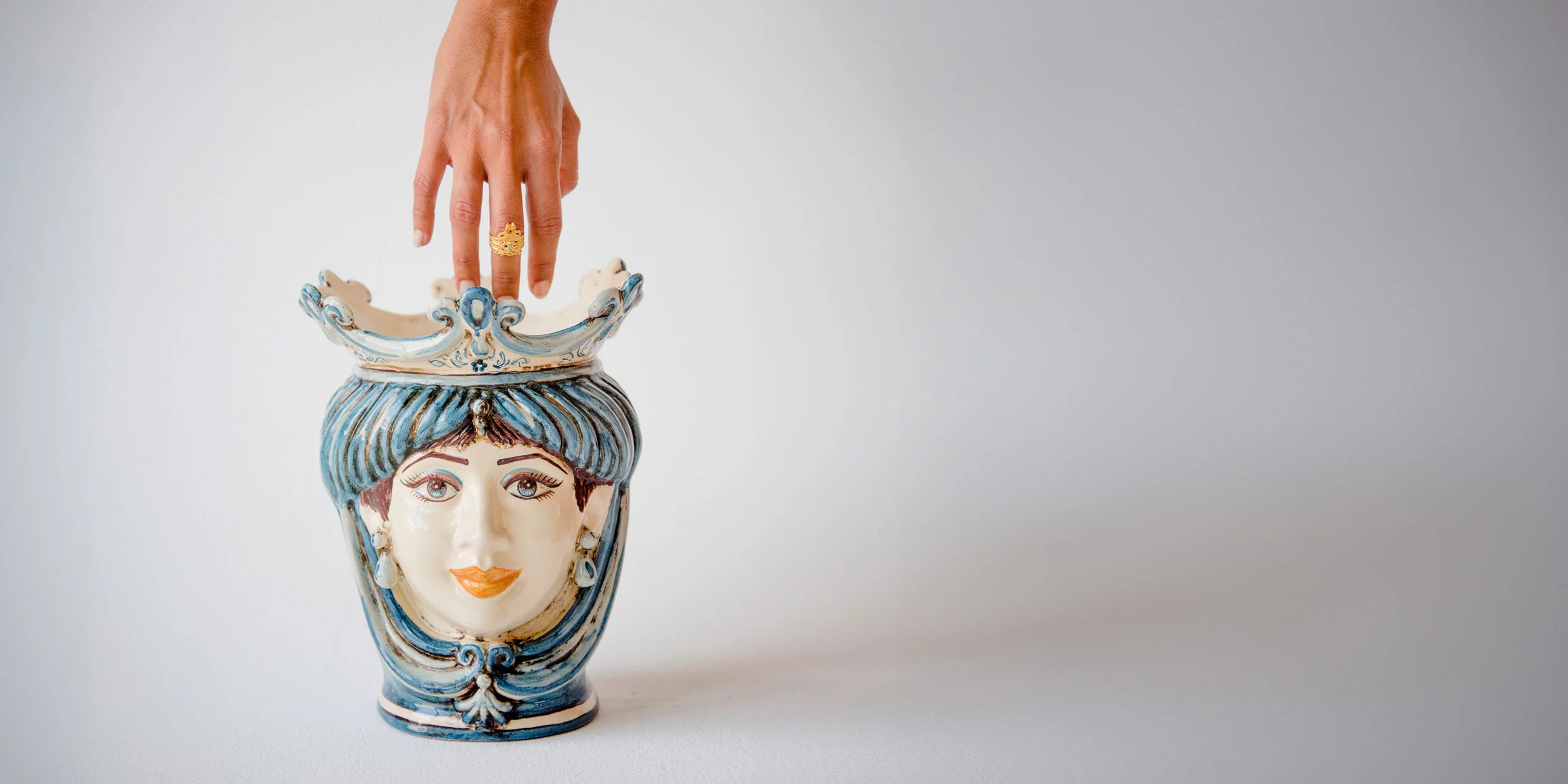
People searching for Sicilian porcelain are almost always looking at Sicilian maiolica, which is a different material. The confusion is understandable, the words get used loosely by sellers, and it matters for a practical reason: the two behave differently in the house, and they chip, ring and age differently.
Here is the short version. Caltagirone ceramics are tin-glazed earthenware, not porcelain. The Italian name for that material is maiolica. Nothing about it is a lesser product, but it is not the same thing, and anyone selling you Sicilian porcelain is either using the word loosely or selling you something that did not come from a Caltagirone workshop.
The general families of ceramic, and how glazed ware, porcelain and terracotta differ from one another, are set out in our sister article on types of ceramics. What matters here is the one line that applies to Caltagirone: the body is earthenware, low-fired and slightly porous, and the white surface you see is a glaze over it rather than the color of the clay.
So what is maiolica
Maiolica is earthenware with a specific finish: the fired body is dipped in an opaque white glaze made with tin, the decoration is painted onto that glaze while it is still raw and powdery, and the piece is fired a second time so that colors and glaze fuse into one glassy layer.
That white tin glaze is the whole point. It gave painters a bright, even ground to work on at a time when earthenware bodies were dull and blotchy, and it is why maiolica colors read the way they do. The name is thought to come from the trade route through Majorca, along which the technique reached Italy from the Islamic world.
The same material has other regional names, which is worth knowing when you are comparing pieces across countries: faience in France, delftware in the Netherlands, talavera in Mexico and Spain. Different traditions, different palettes, the same tin-glazed earthenware underneath.
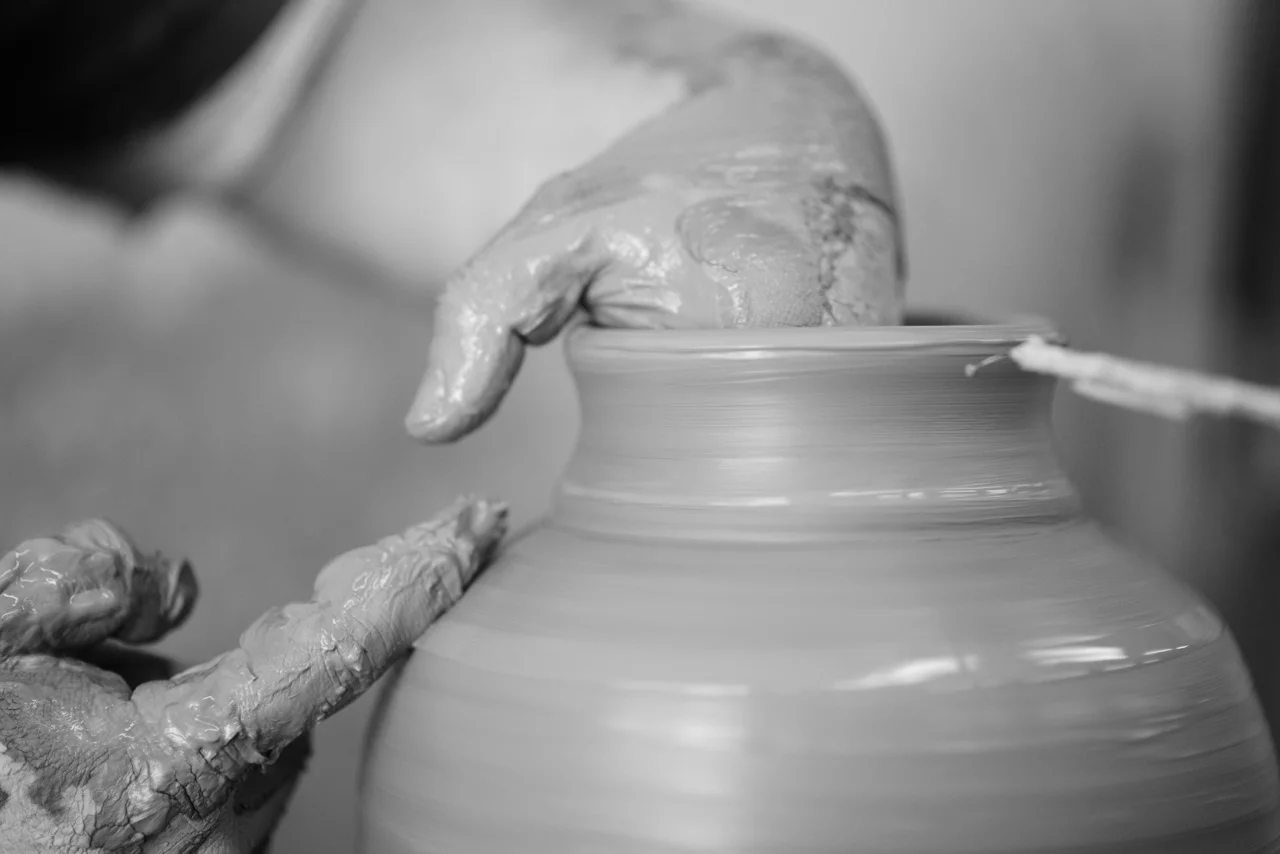
How it is actually made, stage by stage, is set out in how Sicilian ceramics are made. The part that matters here is the second firing: it is what makes the decoration permanent rather than printed on top.
A word of warning about the word majolica
In English, majolica carries two meanings, and confusing them will send you looking at the wrong objects.
The first is what we have been describing: Italian maiolica, tin-glazed and flat-painted. The second is Victorian majolica, a nineteenth-century English product with thick, colored lead glazes poured over heavily modelled relief, in deep greens and browns. It looks nothing like a Caltagirone piece.
If you are searching auction listings or antique dealers, the Italian spelling maiolica and the English majolica are a useful way to keep the two apart.
How to tell earthenware from porcelain in front of you
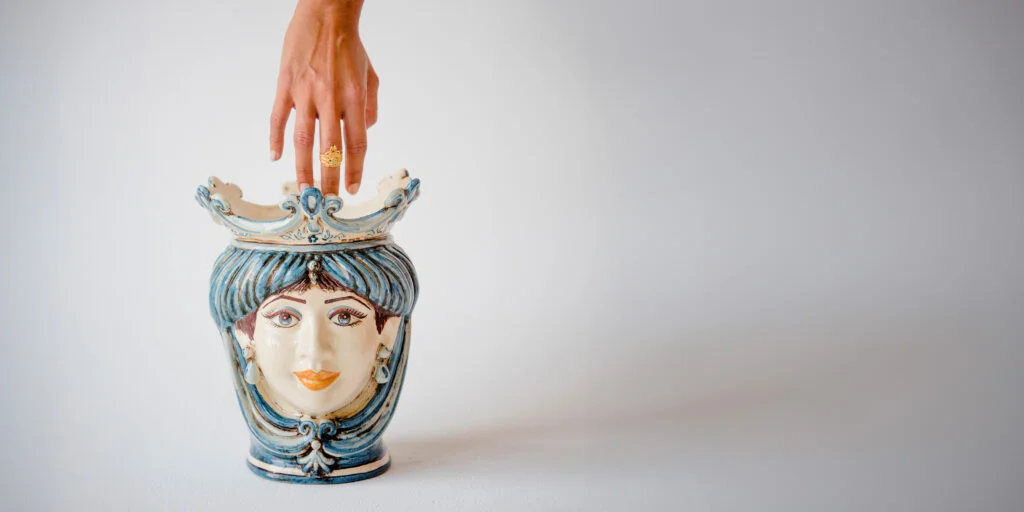
Four checks, none of which needs any equipment.
Hold it up to a lamp. This is the decisive one. A thin section of porcelain, the rim of a cup or the edge of a plate, glows and lets light through. Earthenware stays opaque no matter how strong the light.
Tap the rim. Porcelain gives a clear note that carries on for a moment. Earthenware answers with a shorter, flatter sound that stops almost at once.
Look at the unglazed base. On earthenware the exposed clay is warm in color and slightly gritty to the fingertip. On porcelain it is white, smooth and dense, close to the color of the glazed surface above it.
Weigh it in your hand. For the same size, earthenware is thicker-walled and heavier. Porcelain achieves its strength with less material, so it feels lighter and finer than its size suggests.
What the difference means once it is in your house
This is the part that actually affects you, and it is why the distinction is not academic.
Chips show. A chip on a porcelain rim exposes a white body against a white glaze and is easy to miss. The same chip on earthenware exposes a warm terracotta body against a white glaze, and it is immediately visible. Nothing has gone wrong with the piece; the contrast is simply higher.
The glaze can craze. Fine lines can develop in an earthenware glaze over time or after a sudden change of temperature. It is cosmetic, in the glaze rather than the body, and on old maiolica it is expected. Porcelain rarely does it.
Water and frost matter more. A porous body under the glaze means an unglazed base can take up water, and water taken up in autumn expands when it freezes in January. Porcelain does not care. Earthenware does, which is the single most important thing to know if you are keeping a piece outdoors in the United States.
Neither belongs in a dishwasher if it is hand-painted, and that has nothing to do with the body. It is the decoration and any gold or luster that suffer.
All of this is covered in practical terms in how to care for Sicilian ceramics.
Is porcelain better?
No, and the question imports a hierarchy that does not exist here.
Porcelain is technically the more refined body: harder, non-porous, translucent. If you want a thin, white, resilient dinner service, that is what porcelain is for. But the value of a Caltagirone piece was never in the body. It is in the hand painting, in a decorative tradition with a documented history, and in the fact that no two pieces are identical because a person made each one. A porcelain blank with a printed transfer on it is technically the superior material and artistically nothing at all.
So the useful question is not which material ranks higher. It is whether the decoration in front of you was painted or printed, which is a different check entirely and is covered in identifying authentic Sicilian ceramics.
In short
- Caltagirone is earthenware, tin-glazed and twice fired. The name for that is maiolica.
- It is not porcelain, and Sicilian porcelain as a category does not really exist.
- Hold it to a light to settle the question in two seconds: porcelain glows, earthenware does not.
- Italian maiolica and Victorian majolica are two different things that share an English word.
- Neither is better. The question worth asking is painted or printed.
If you are working out what the pieces themselves are called, the Caltagirone ceramics buyer’s guide sets out the families and how to read a listing, and ceramics in Sicily covers where the tradition comes from and why the palette settled as it did.