Caltagirone is a hill town in the province of Catania, in south-eastern Sicily, and it has been making ceramics for something close to a thousand years. If you are looking at Sicilian ceramics online, a large share of what you see comes from here. This guide is about choosing a piece rather than about the history: what the different families of objects are, how to read a listing, and what to think about before you order.
Why Caltagirone specifically
Two reasons, one geological and one historical. The hills around the town hold clay suitable for majolica, which is why the craft settled here rather than somewhere else on the island. And the town’s long exposure to Arab, Norman and Spanish rule left a decorative vocabulary that is genuinely layered. The geometry and the color palette are not decoration invented for tourists, they are the residue of who governed Sicily and when.
The practical consequence for a buyer: pieces from Caltagirone follow recognisable decorative lines. Once you know the names, a catalog stops looking like an undifferentiated wall of color.
The main families of pieces
Vases and floor vases
The broadest category, running from small table pieces to floor vases over half a meter tall. Shapes carry their own names (potiche, albarello, amphora), and each takes decoration differently. Tall narrow forms suit vertical repeating patterns; rounded forms suit a single central motif.
Pine cones
The pigna is the piece most associated with Sicilian domestic tradition. It is given as a housewarming gift and placed at the entrance or on a balcony, and it stands for prosperity and good health. Sizes run from a few centimeters to substantial floor pieces, and the same form appears as table centrepieces, lamps, and lidded jars.
Lamps
Ceramic bases with fabric shades, in the same shapes and decorative lines as the vases. Worth knowing when you compare listings: the height quoted may be the ceramic body alone or the body with the shade, and the difference can be twenty centimeters or more. Check which figure you are reading.
Holy water fonts and devotional pieces
A small, distinctly Sicilian category: wall-mounted acquasantiere, crucifixes, nativity figures. These are usually the most finely painted work in a catalog, because the format is small and the subject demands it.
Heads
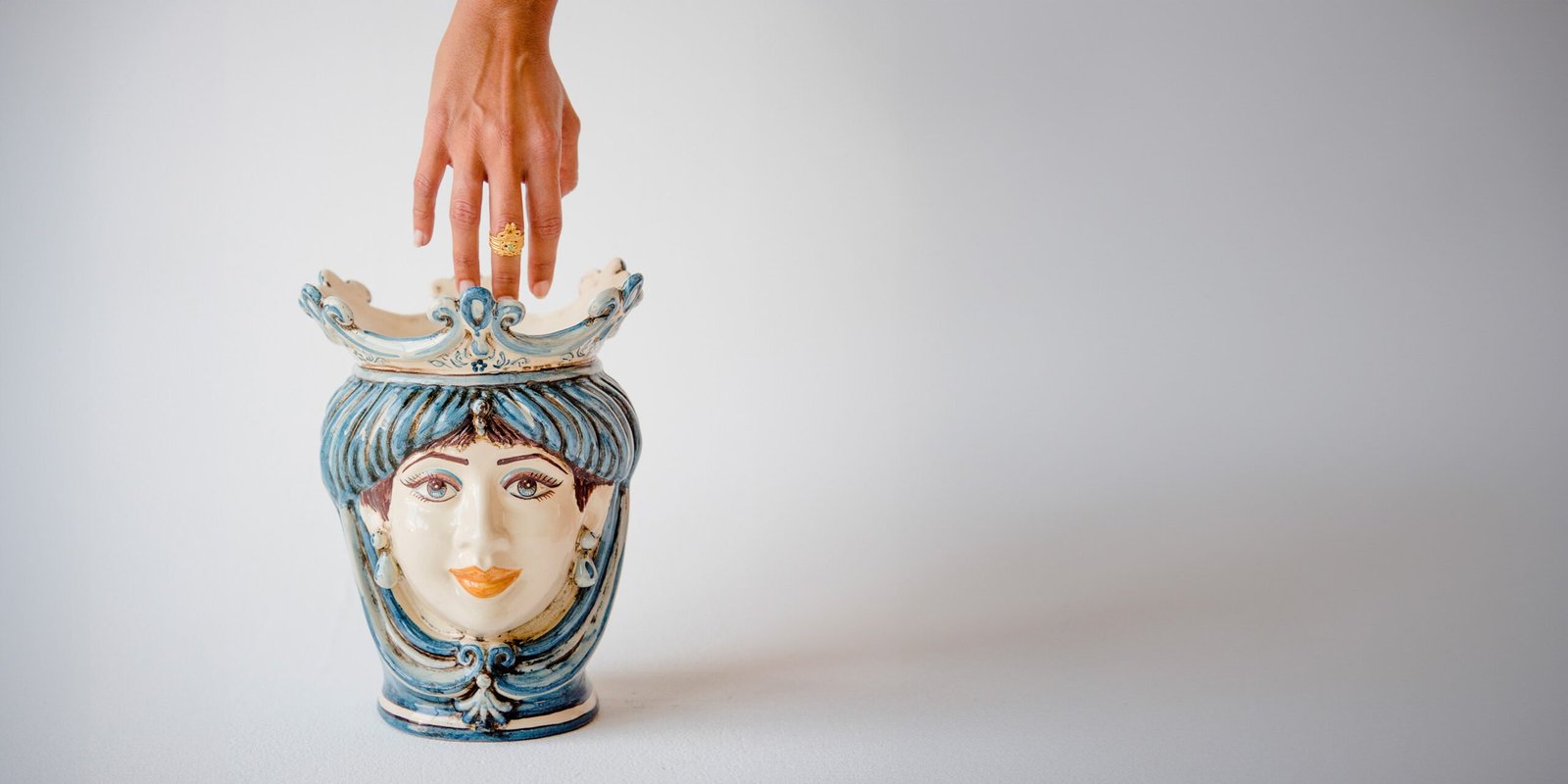
The teste di moro, the paired ceramic heads used as planters, are the best-known Sicilian ceramic form internationally and carry a story of their own. They are a subject in their own right rather than a footnote to a buyer’s guide.
Reading a listing
Size is the thing people get wrong
Photographed against a plain background, a 25 cm piece and a 50 cm piece look identical. Twenty-five centimeters is just under ten inches; fifty is nearly twenty, and heavy. Measure the shelf or the console before you order, not after. Any seller shipping to the US should give both units. If they do not, ask.
Decoration names are lines, not colors
A name like Antico Fogliame or Decoro Sicily refers to a whole decorative line: a specific palette, a specific set of motifs, applied consistently across different objects. If you like a decoration on a vase, you can usually find it on a lamp or a centrepiece too, and the pieces will sit together as a set.
Variation is the point
Hand painting means two pieces of the same model are never identical. A brushstroke sits a millimeter differently, a color pools slightly more in one place. This is what you are paying for. Uniformity across every unit is the signature of transfer printing, not of a workshop.
Ordering considerations
- Lead time. Made-to-order work from a Caltagirone workshop takes weeks, not days. Ours is up to 30 days from confirmation. Plan around it for gifts.
- Outdoors. Glazed majolica handles a Mediterranean balcony well. It handles a freezing winter far less well, because water in a hairline crack expands. If the piece is going outside in a cold climate, bring it in for the winter.
- Custom work. A workshop can usually make a size or a decoration that is not in the catalog. It is worth asking rather than settling.
- Transit. Ceramic is fragile and insurance matters. Check it is included, and sign for delivery with reserve.
Where to look
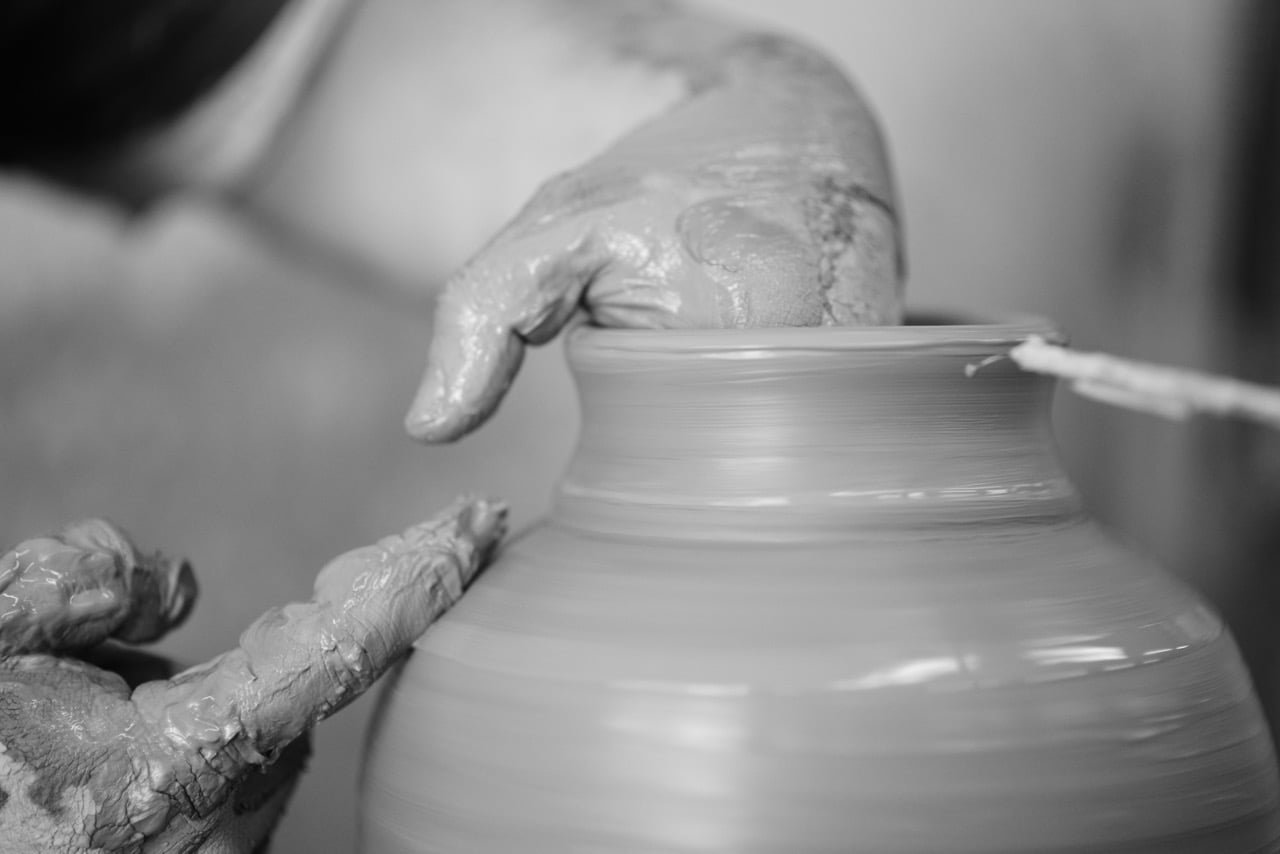
Our catalog for English-speaking customers, with dimensions in both units, is at italianpottery.us. If you want to see how the pieces are actually made before choosing, the production process page follows a piece from clay to final firing, and the classic and modern lines are a good way to narrow down a style.
For the object itself rather than the buying process, our guide to identifying authentic Sicilian ceramics covers marks, glaze and craftsmanship, and how Sicilian ceramics are made goes through the stages in detail. If you are ordering from the United States, shipping and customs are covered separately. And if you are still deciding who to order from, where to buy authentic Sicilian ceramics online compares workshops, resellers and marketplace listings. Once a piece is yours, how to care for Sicilian ceramics covers washing, frost and safe display, and majolica or porcelain explains what the material is and why Sicilian porcelain is not really a category.