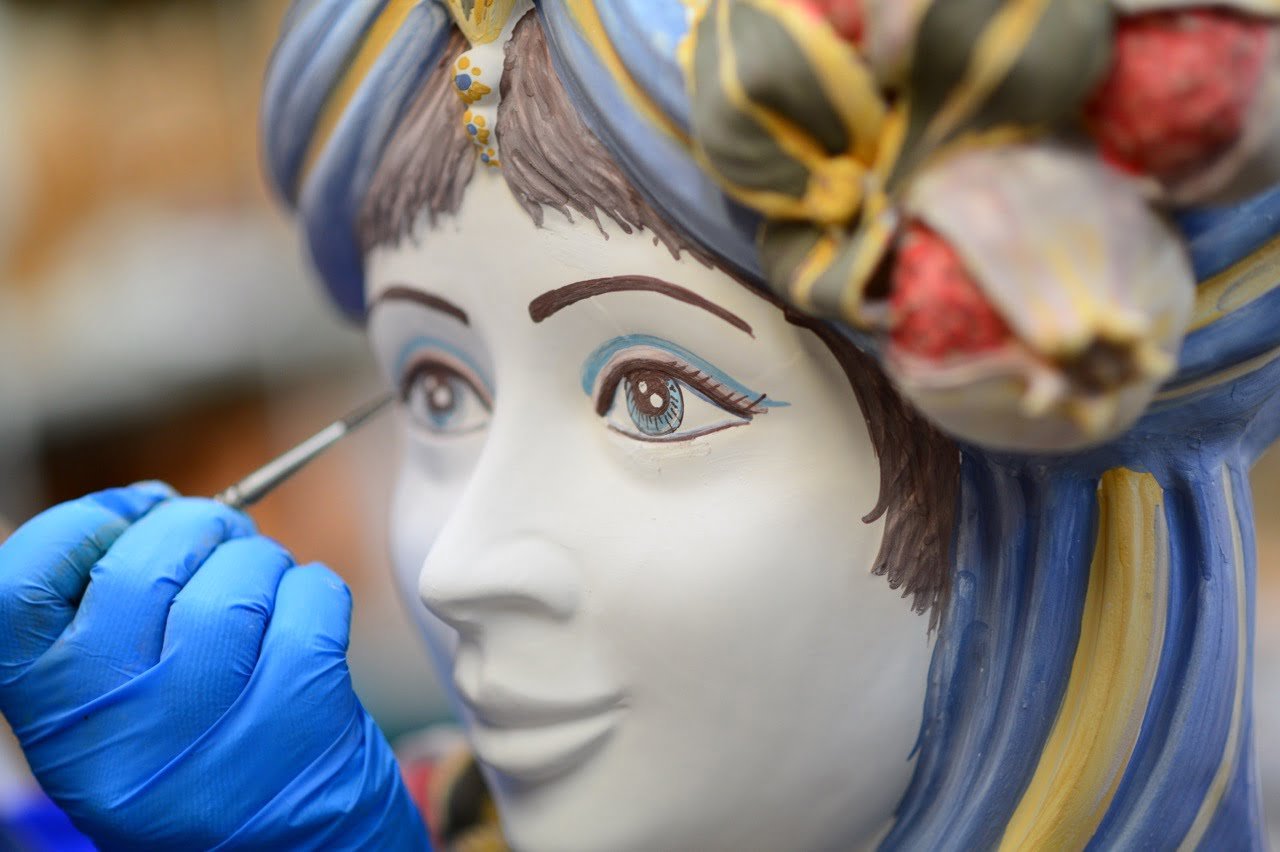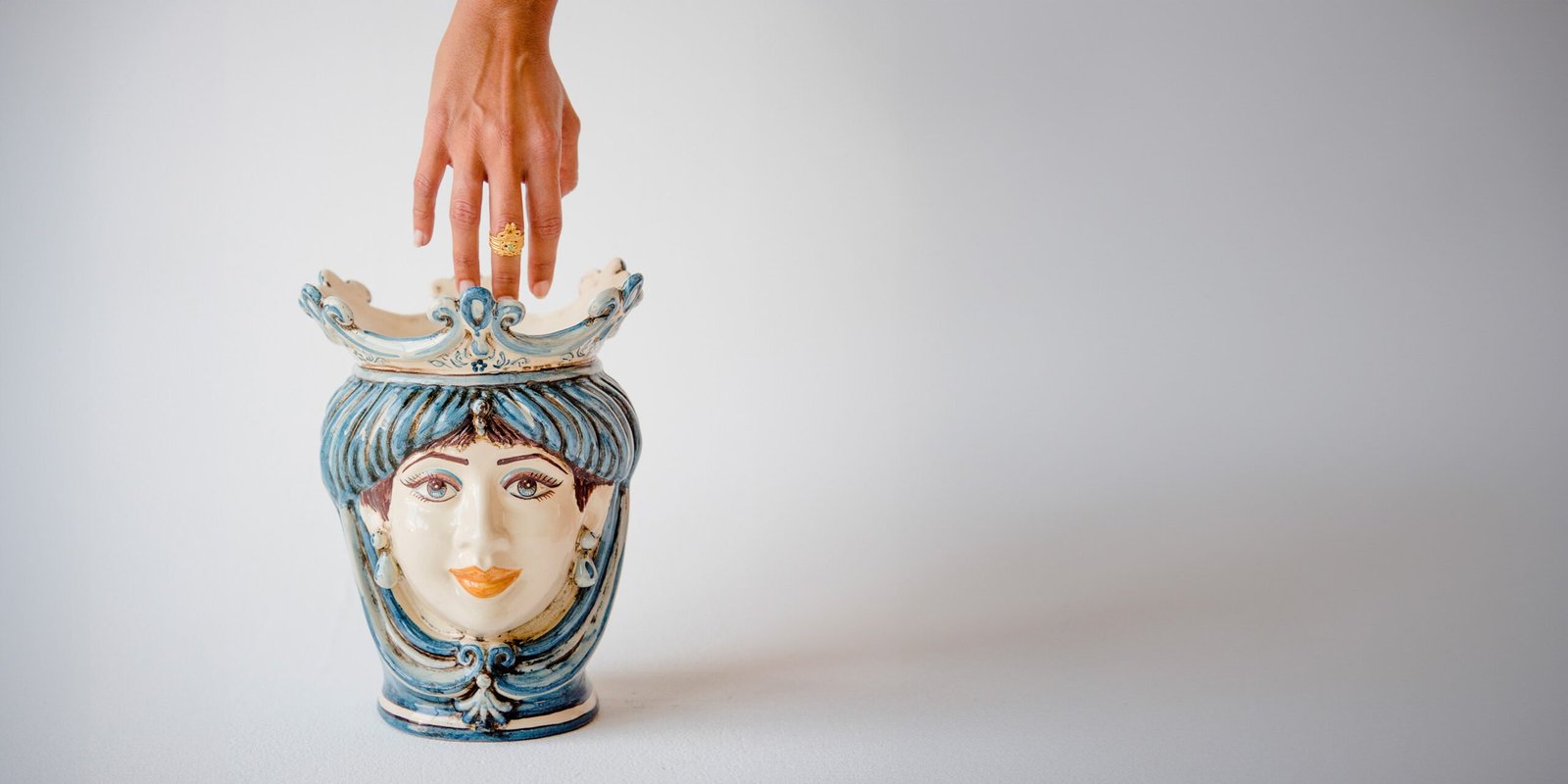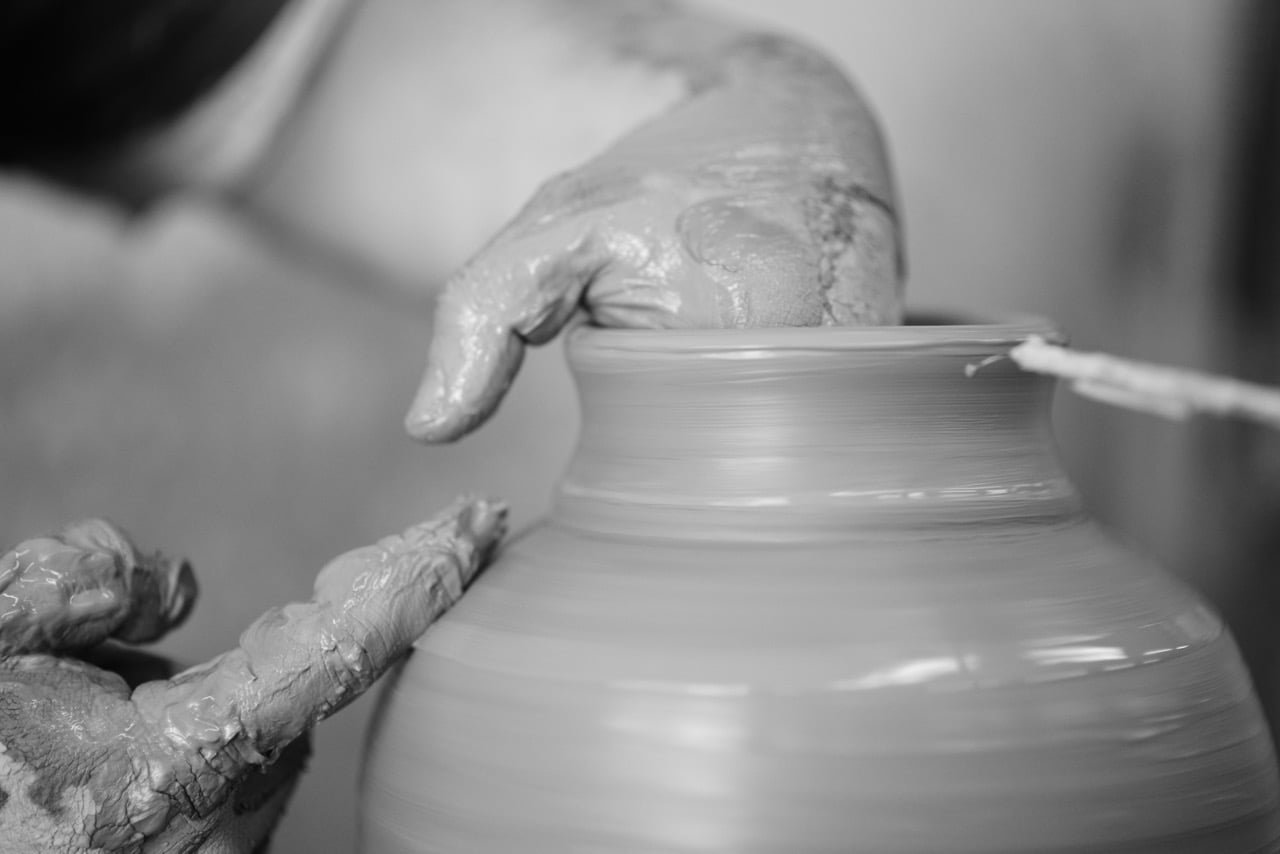
Hand-painted Caltagirone maiolica is tougher than it looks in one respect and more delicate than people expect in another. The body is earthenware, fired twice, and the decoration sits under a glass-like glaze that will not fade. What it does not tolerate is a dishwasher, a hard frost, or a sudden change of temperature.
This page covers the questions we are actually asked by customers in the United States, where the dishwasher is standard, most of the country goes below freezing in winter, and a good part of it worries about earthquakes.
Can Sicilian ceramics go in the dishwasher?
Wash them by hand. The body would survive a dishwasher; the decoration is what suffers.
Dishwasher detergents are strongly alkaline and mildly abrasive, and they are designed to work at temperatures no one washes up at by hand. Over repeated cycles that combination dulls a hand-painted glaze, taking the depth out of the colors, and the high-temperature dry cycle adds thermal stress on top. One wash will not ruin a piece. Fifty will visibly flatten it.
Anything with gold or a luster finish must never go in. Those finishes are applied in a third, lower-temperature firing and sit closer to the surface than the colored glaze. A dishwasher strips them, and it is not reversible.
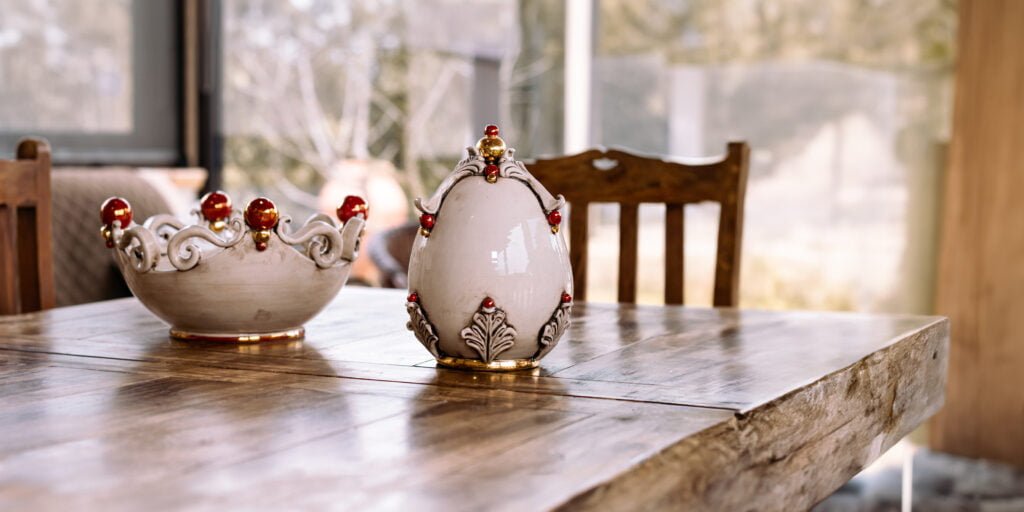
By hand: warm water, a little mild washing-up liquid, a soft cloth or sponge. No scouring pads, no powder cleansers, no bleach, nothing containing grit. If something is stuck on, let it soak in warm water rather than attacking it.
Can they be used for food?
It depends on the piece, and this is worth asking about rather than assuming.
Much of the traditional Caltagirone repertoire is decorative by design: ornamental plates made to hang, holy water fonts, heads, pine cones, floor vases. Other pieces are made as tableware and are intended for food. The two look similar to someone who has not handled them, because the same decoration lines are used on both.
So before you serve food on a piece, ask us about that specific item. We will tell you plainly whether it was made for the table or for display. It is a short question with a definite answer, and it is better than guessing from a photograph.
Two things that hold regardless: a decorative piece is not a serving dish just because it is plate-shaped, and any piece with gold or luster should be kept away from food and away from the microwave.
Can they go outside?
In Sicily, yes, all year. In most of the United States, only for part of it.
The problem is frost, and the mechanism is worth understanding because it decides what you can leave out. Earthenware has a porous body under the glaze. Left outdoors it takes up water, through the unglazed base, through the rim of a drainage hole, through any hairline in the glaze. When that water freezes it expands, and it expands inside the wall of the piece. The result is glaze flaking away in patches, or a crack that appears in spring having been made in January.
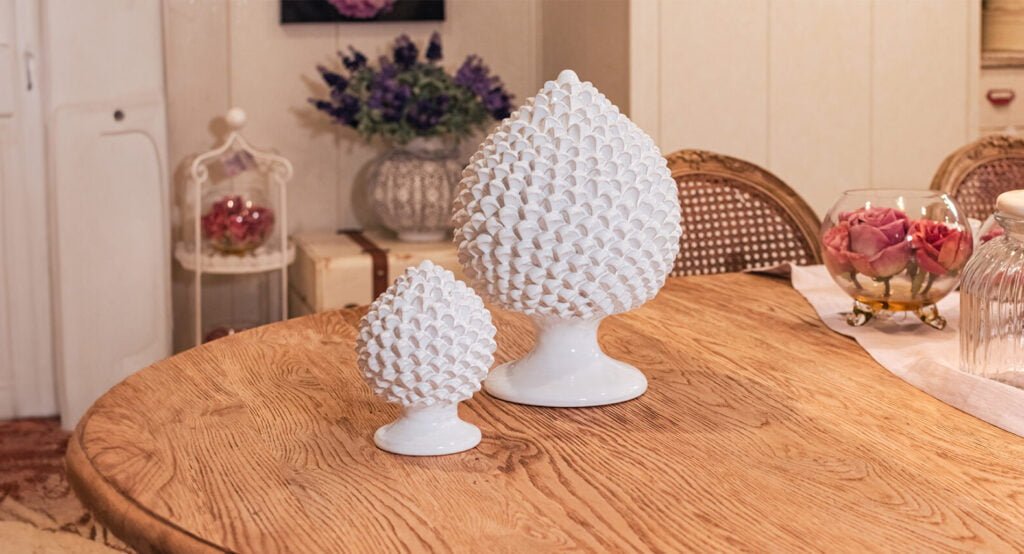
Practically, that means: outdoors from spring to autumn is fine anywhere; over winter, bring pieces in if your climate goes below freezing, which is most of the country away from the southern coasts and the desert Southwest. If a piece has to stay out, get it off the ground and out of standing water, and accept the risk.
Sun, by contrast, is not a problem at all. Ceramic pigments are fired into the glaze at close to 1000°C, which makes them about as lightfast as a color can be. A piece in a south-facing window will look the same in twenty years. It is one of the real differences between fired decoration and anything printed.
What is crazing, and is it a fault?
Crazing is a network of very fine lines in the glaze, visible when you tilt a piece to the light. It is in the glaze only, not in the body, and it does not weaken the object.
It happens when glaze and body expand at slightly different rates, and thermal shock is what usually triggers it: a cold piece filled with hot water, a warm piece rinsed under a cold tap, a plate taken from a hot room to a cold porch. On antique maiolica it is normal and generally considered part of the object’s age. On a new piece it is avoidable, and the way to avoid it is to change temperature gradually.
None of these pieces belong in an oven, on a hob, or under a broiler, and that includes pieces made for the table. Crazing is a property of the tin-glazed earthenware these pieces are made from, which is not porcelain: majolica or porcelain sets out the difference and what it changes.
Using a vase for fresh flowers
Check the inside first. If a vase or cachepot is glazed internally it holds water without trouble. If the interior is raw, unglazed clay, the body will slowly draw water through and you will find a damp ring on the furniture underneath.
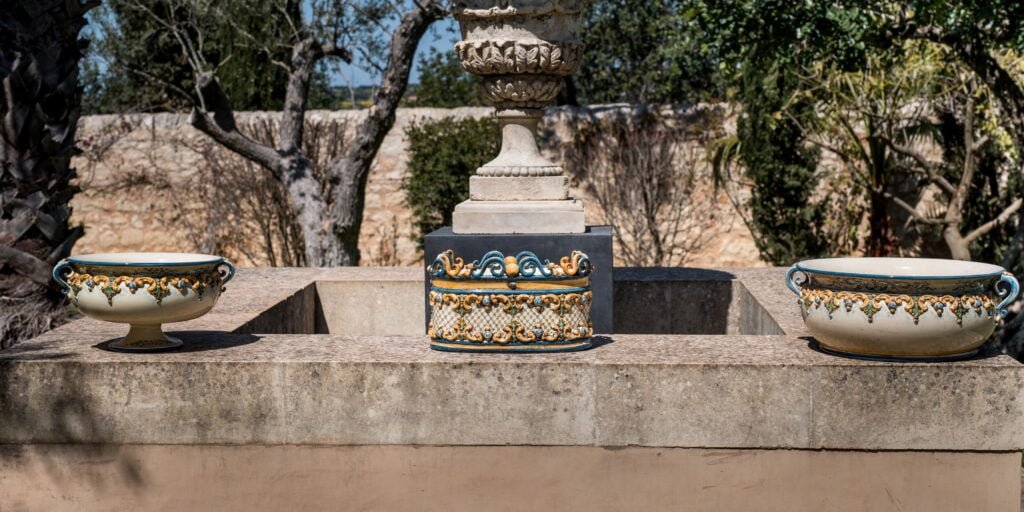
The fix is simple: stand a glass jar or the plant’s own plastic pot inside, and keep the ceramic as the outer shell. That is what a cachepot is for in the first place. It also means you can change the flowers without turning the piece upside down over a sink.
If a piece has a drainage hole and you plant into it directly, expect the base to stay damp and do not stand it on wood.
Dust, relief work and hard water
Relief decoration, and the modelled detail on heads and pine cones, collects dust in the hollows where a cloth cannot reach. Use a dry, soft brush: a clean paintbrush or a make-up brush works better than anything sold for cleaning. A damp cloth pushes dust into the recesses and dries as a gray line exactly where you do not want one.
If your water is hard, dry pieces with a soft towel after washing rather than leaving them to drip. Air drying leaves a mineral film that builds up over time and reads as a dulling of the glaze, which is then mistaken for wear. It comes off with a little white vinegar on a soft cloth, well rinsed afterwards.
Displaying heavy pieces safely
A large head or a floor vase carries most of its weight low, but the wide profile makes it easy to catch with a sleeve or a passing dog. Lift from the base with both hands, never by a crown, a handle, an ear or an applied flower: those are the parts joined with slip and they are the first things to go.
On a shelf, keep pieces back from the edge and use museum putty under the base. If you are in California or anywhere else with seismic activity, that is not an ornamental precaution, it is the difference between a piece surviving a shake and not.
Chips, cracks and repairs
A chip on a rim or a foot removes glaze and exposes the porous body underneath. On a decorative piece that is cosmetic. On something used with food or water it matters more, because an unglazed break absorbs.
Small chips can be filled and retouched by a ceramics restorer, and a clean break can be bonded. What cannot be done is a true repair of the glaze: the piece would have to be fired again, and a refire would destroy the decoration around it. Anyone offering an invisible repair is offering a retouch, which is a perfectly good outcome as long as you know that is what it is.
If a piece arrives from us damaged, that is a different matter and it is covered: write to us with photographs and we handle it. The details are in shipping Sicilian ceramics to the United States.
In short
- Hand wash, warm water, mild detergent, soft cloth. Never the dishwasher, and never anything abrasive.
- Gold and luster: hand wash only, no microwave, away from food.
- Change temperature gradually. No oven, no hob.
- Outdoors in the warm months anywhere; indoors over winter wherever it freezes.
- Sunlight is harmless. Fired pigment does not fade.
- Use a liner for fresh flowers unless the inside is glazed.
- Dry brush for relief work, towel dry if your water is hard.
- Lift from the base. Museum putty on shelves.
- Ask us before serving food on any specific piece.
If you are still choosing rather than caring for something you own, the Caltagirone ceramics buyer’s guide covers the families of pieces and how to read a listing, and identifying authentic Sicilian ceramics covers how to tell hand-painted work from a printed decoration before you order.