The simplest way to build an Italian ceramic tableware set is in three stages: four place settings first, serving pieces second, the extras last. That is how most of our customers in the United States and the United Kingdom do it, and it is how we would do it ourselves. The rest of this article covers the sizes that matter, how to choose a pattern you will still like in ten years, and what changes when the pieces are painted by hand over several months.
Start with four place settings, not twelve
A place setting in our Caltagirone workshop means two pieces: a dinner plate and a deep pasta bowl. That is what an Italian table actually uses at a weeknight meal. Bread plates, chargers, and soup cups came later, and most Sicilian families never owned them.
Four settings is enough to eat from every day and to learn how the pieces behave in your kitchen. You will find out whether the plates fit your dishwasher rack, whether the weight bothers you, and whether the pattern looks the way you imagined under your own light. If it does, you add four more. If something is off, you have learned it on eight pieces instead of twenty-four.
The mistake we see most often is the opposite: a twelve-place order from a workshop the buyer has never received a single piece from. Hand-painted majolica is a material you need to hold before committing to it.
The sizes that actually matter
Italian and American plate sizes do not line up, and this causes more disappointment than anything else. Measure your cabinet shelves and your dishwasher rack before you order.
- Dinner plate (piatto piano): 10 to 10.6 inches (26 to 27 centimeters). American dinner plates often run 11 inches or more, so an Italian plate can look slightly small next to what you already own. It fits a standard dishwasher rack without trouble.
- Pasta bowl (piatto fondo): 8.5 to 9.5 inches (22 to 24 centimeters), with a wide flat rim and a shallow well. It is not a cereal bowl. The rim is where the painter puts the decoration, and it keeps sauce off your thumbs.
- Side or dessert plate (piattino): 7.5 to 8.3 inches (19 to 21 centimeters). Useful for bread, cheese, and cake. Skip it in stage one.
- Charger or presentation plate: 12 to 13 inches (30 to 33 centimeters). Decorative. Most do not fit a dishwasher, and many do not fit a cabinet. Buy one or two, not a full set.
We wrote a longer piece on how Italian ceramic plates are sized, shaped, and named if you want the full list with measurements and photographs.
Choose the pattern before you choose the pieces
Caltagirone has painted the same handful of motifs for roughly four centuries, and they behave differently at the table. Decide which one you want, then build around it.
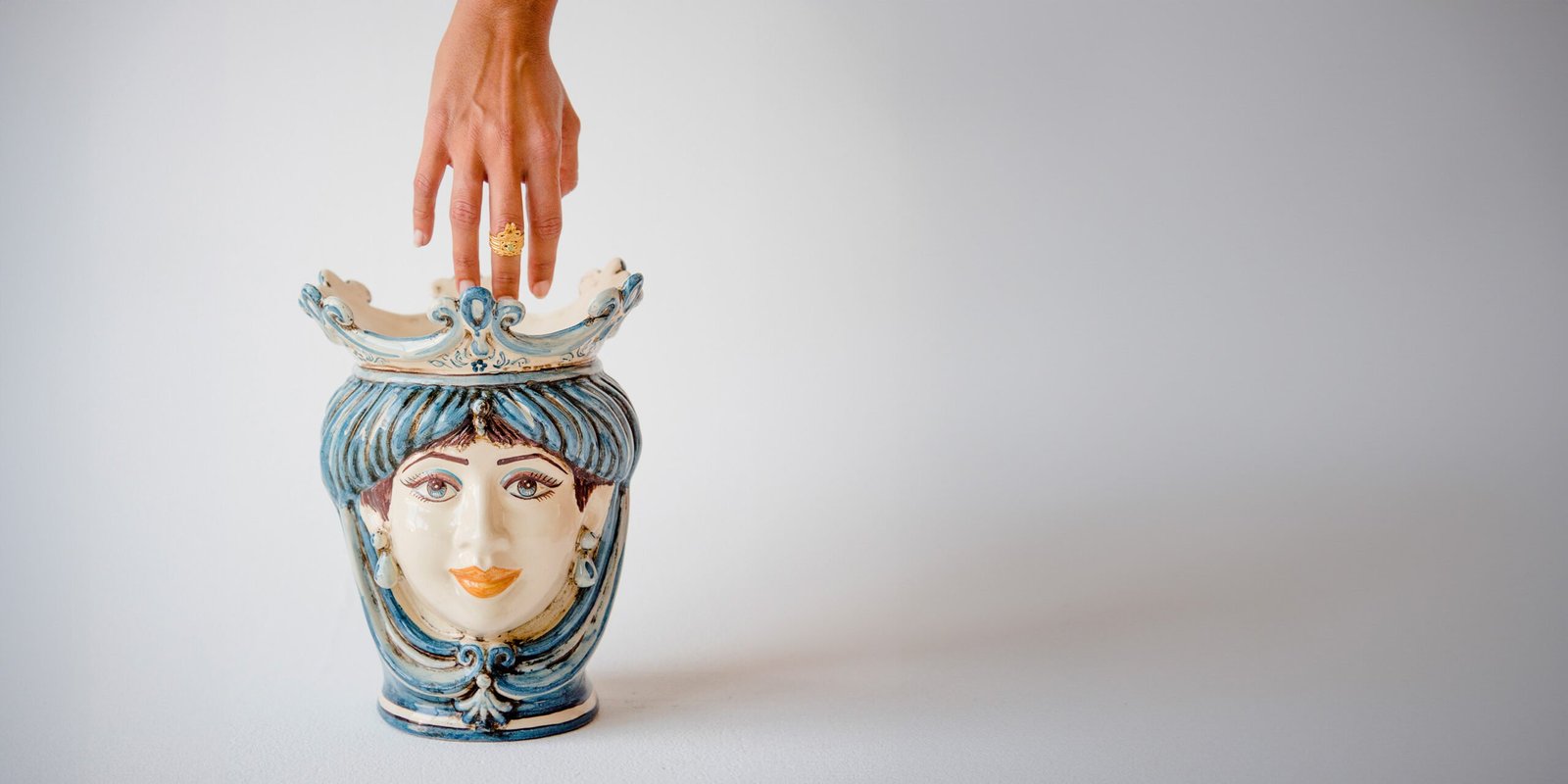
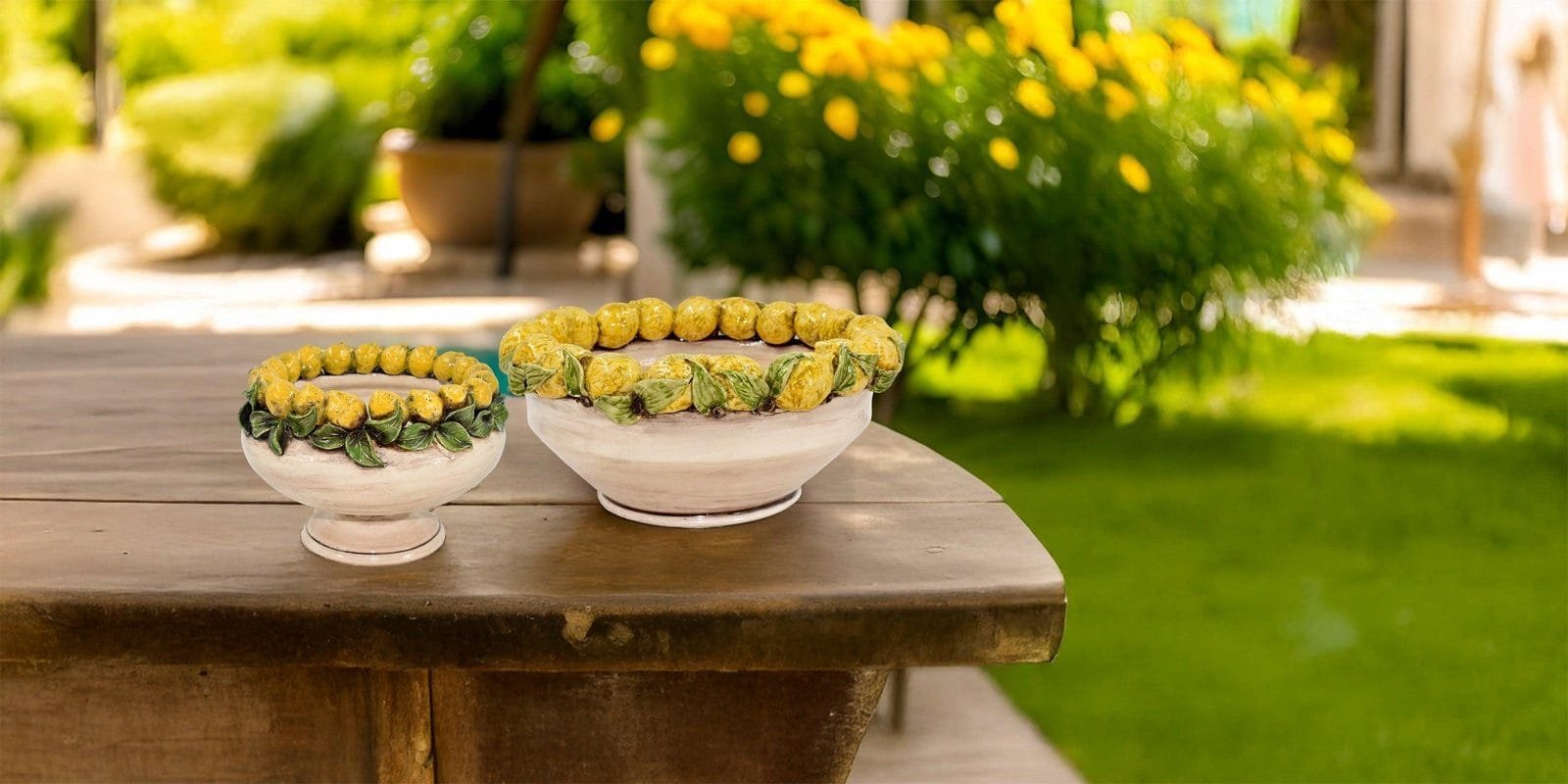
The scrolling leaf and flower work in cobalt blue, antimony yellow, copper green, and manganese brown is the classic. It is dense, and a full table of it is a lot of color. The lemon and pomegranate patterns are lighter and easier to mix with plain white pieces. Geometric bands and the pinecone motif sit somewhere in between. Whatever you pick, we would say this: do not combine two busy patterns in one set. Choose one painted pattern and pair it with white or single-color pieces for contrast.
A practical option that works well is painted dinner plates with plain white pasta bowls, or the reverse. The painted rim shows around the food, the white keeps the table from looking crowded, and you cut the painting work on the set roughly in half.
Stage two: serving pieces that earn their space
Once the place settings have proven themselves, add the pieces that sit in the center of the table. This is where Sicilian majolica is at its best, because a serving bowl gives the painter a large surface and the piece stays on display between meals.
- A large salad or pasta bowl of 11 to 12 inches (28 to 30 centimeters). This gets used more than anything else in the set.
- An oval platter of 14 to 16 inches (35 to 40 centimeters) for roasts, whole fish, or a spread of cheese and cured meat.
- A pitcher holding about 1.5 quarts (1.5 liters), for water or wine. It doubles as a vase when the table is cleared.
- An olive oil cruet and a small bowl for salt. These are small pieces that put the pattern on the table every single day.
Leave the tureen for last, or skip it. It is a shape we enjoy making, but most households use it twice a year.
Stage three: the pieces people forget
Dessert plates, espresso cups, and a cake stand come in the third round. This is also when many customers add a second pattern in a small dose, such as four dessert plates with a different motif that plays against the main set without competing with it.
Mugs deserve a note. The traditional Italian shape is a small espresso cup holding about 2.5 ounces (70 to 80 milliliters), not a 12-ounce mug. We make mugs because customers in the US ask for them, but the handle on a hand-built majolica mug is thicker than on stoneware and the cup is noticeably heavier in the hand. Order one before you order six.
What hand-painted means for a set built over time
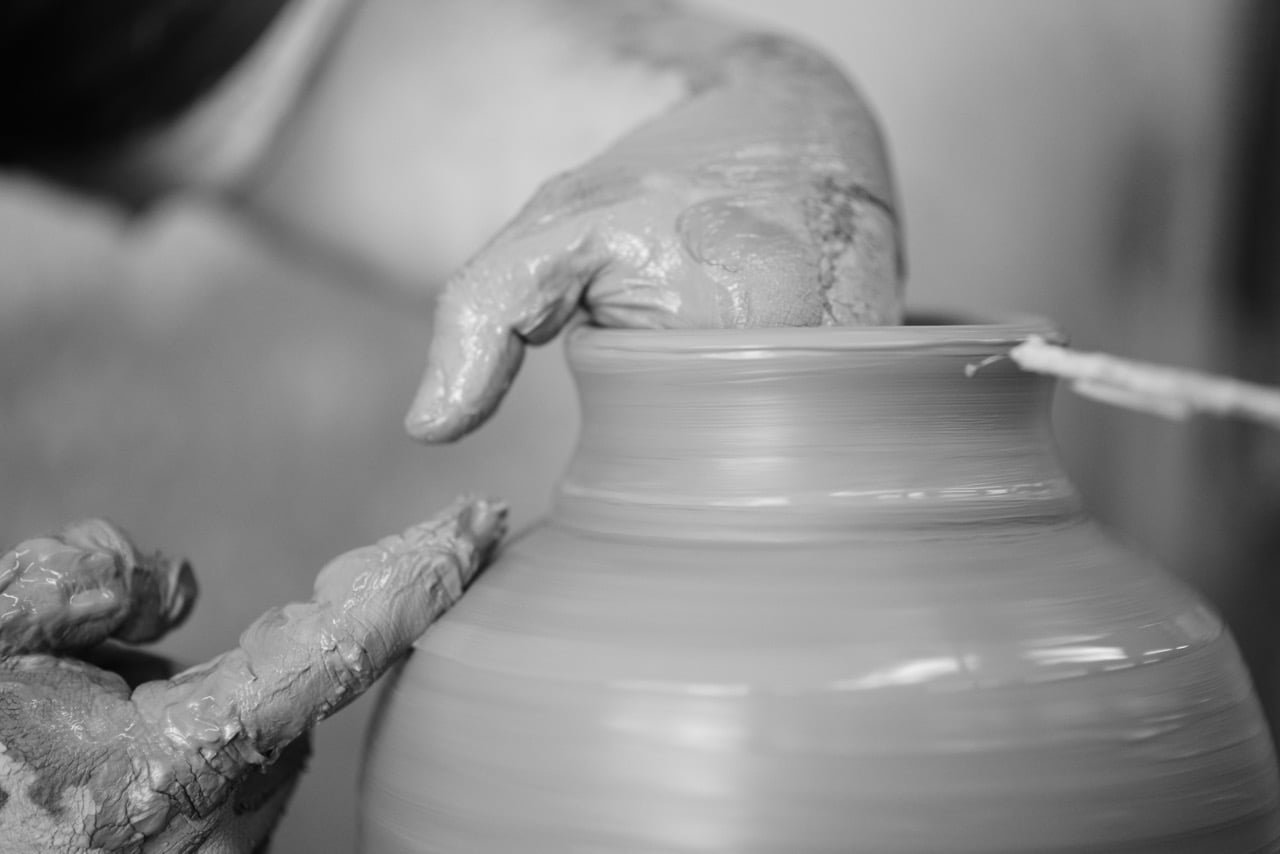
Every piece we make starts as red Sicilian clay, formed in plaster molds or thrown on the wheel depending on the shape. We bisque fire it at around 1,830°F (1000°C), dip it in a white tin glaze, paint the decoration directly onto the powdery raw glaze, and fire it a second time at 1,690 to 1,800°F (920 to 980°C). The clay shrinks about 8 to 10 percent between wet and fired. That is why two plates from the same batch can differ by a few millimeters in diameter, and why the same painter draws a leaf slightly differently on Monday than on Friday.
When a set is bought in stages over a year, the differences grow. A new batch of cobalt pigment can run a shade deeper. A different painter may have taken over the pattern. The glaze may sit a little whiter or a little creamier depending on the kiln load. None of this is a defect and none of it is avoidable. If you want a set to match as closely as possible, tell us it is a continuation of an earlier order so we can pull the same pattern reference and, where possible, assign the same painter. We cannot promise an exact match, and we would not trust a workshop that did.
Some customers turn this into a feature and deliberately vary the rim colors across the set. It works, but decide that at the start rather than discovering it later.
Weight, storage, and daily use
Majolica on a terracotta body is heavier than porcelain. A dinner plate from our workshop weighs roughly 1.5 to 2 pounds (700 to 900 grams). Twelve of them on one shelf is a real load, so stack in sixes and put a piece of felt or a paper napkin between painted surfaces. The foot ring on the underside is unglazed and will scratch the plate below it.
The glaze is softer than porcelain glaze. It will show fine marks from knives over years of use, and the terracotta underneath is porous where it is unglazed, so let the foot ring dry fully before stacking. The colors are fired into the glaze and do not wash off; what wears is the glaze surface itself. We cover water temperature, dishwashers, chips, and crazing in our guide to caring for Sicilian ceramics, and we would read it before the first wash rather than after the first chip.
Our glazes are lead-free and the pieces are made to eat from. If you need a written test report for food contact, ask before you order. Not every workshop keeps one on hand, and it is a fair question to put to anyone selling you tableware.
Frequently asked questions
How many pieces make a complete Italian ceramic tableware set?
For four people: four dinner plates, four pasta bowls, one large serving bowl, one platter, and a pitcher. That is 11 pieces and covers most meals. Dessert plates, cups, and a cake stand bring it to around 20.
Can I mix hand-painted Sicilian plates with the white dishes I already own?
Yes, and we recommend it. A painted dinner plate under a white bowl, or the reverse, looks intentional and keeps the table from feeling crowded. Match the plate diameters within half an inch so the stacks sit evenly in the cabinet.
Will pieces I order later match the ones I bought first?
Closely, but not exactly. Pigment batches, kiln loads, and the painter’s hand all shift a little over months. Tell us it is a continuation order and we will work from the same pattern reference. Expect small differences and treat them as normal.
Are Caltagirone ceramics dishwasher safe?
Ours tolerate a gentle cycle at low temperature with a mild detergent, but hand washing keeps the colors and the glaze surface in better shape over decades. Anything decorated with gold luster stays out of the dishwasher entirely. Never take a plate from a cold cabinet into a hot oven.